









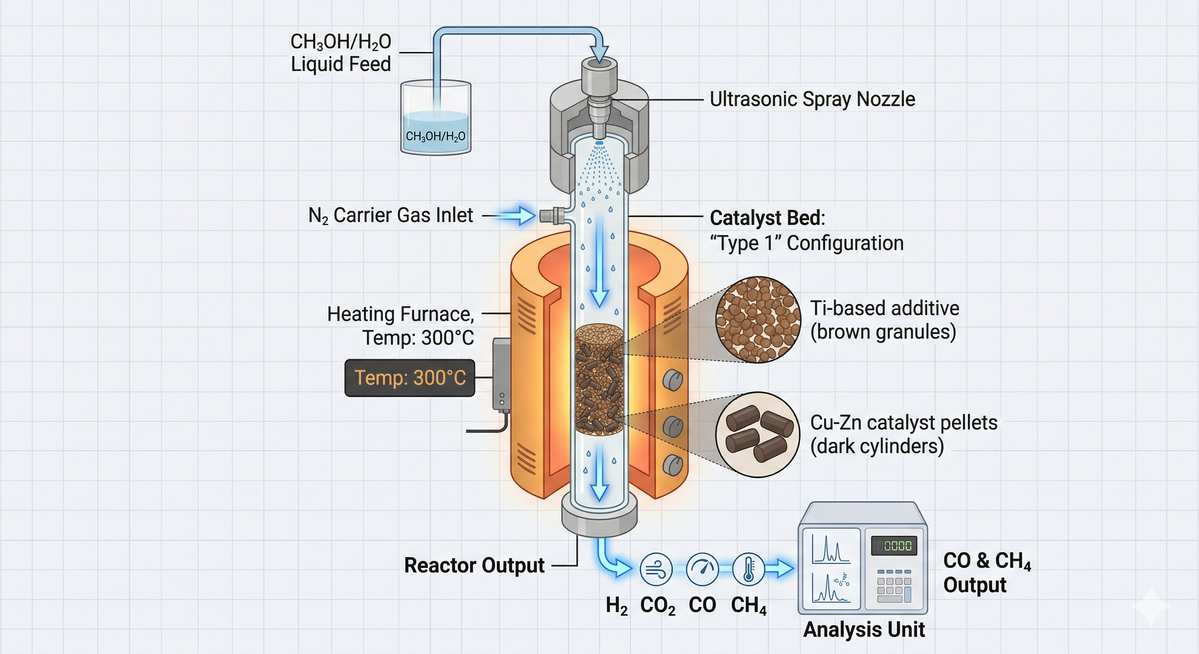
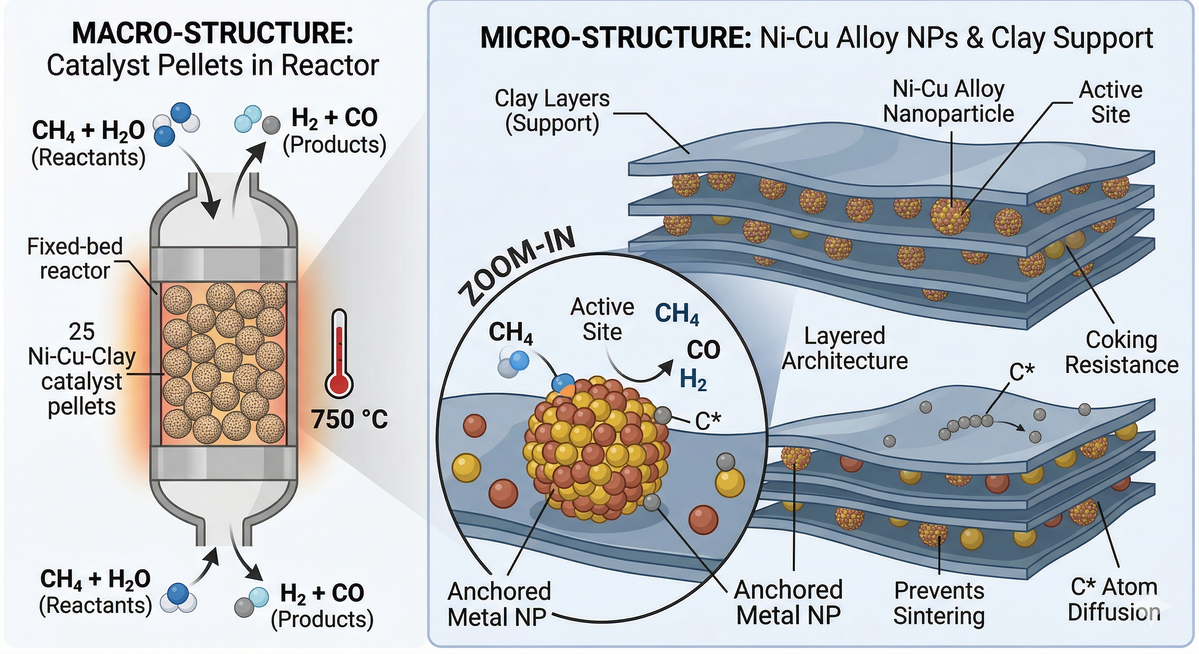
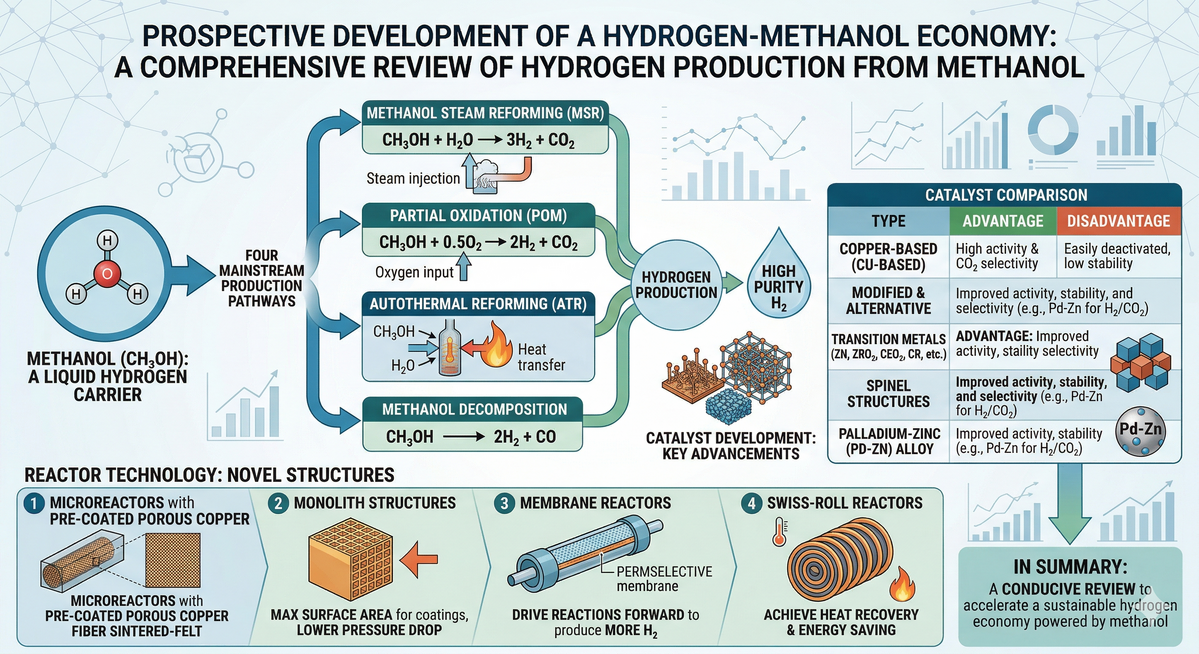
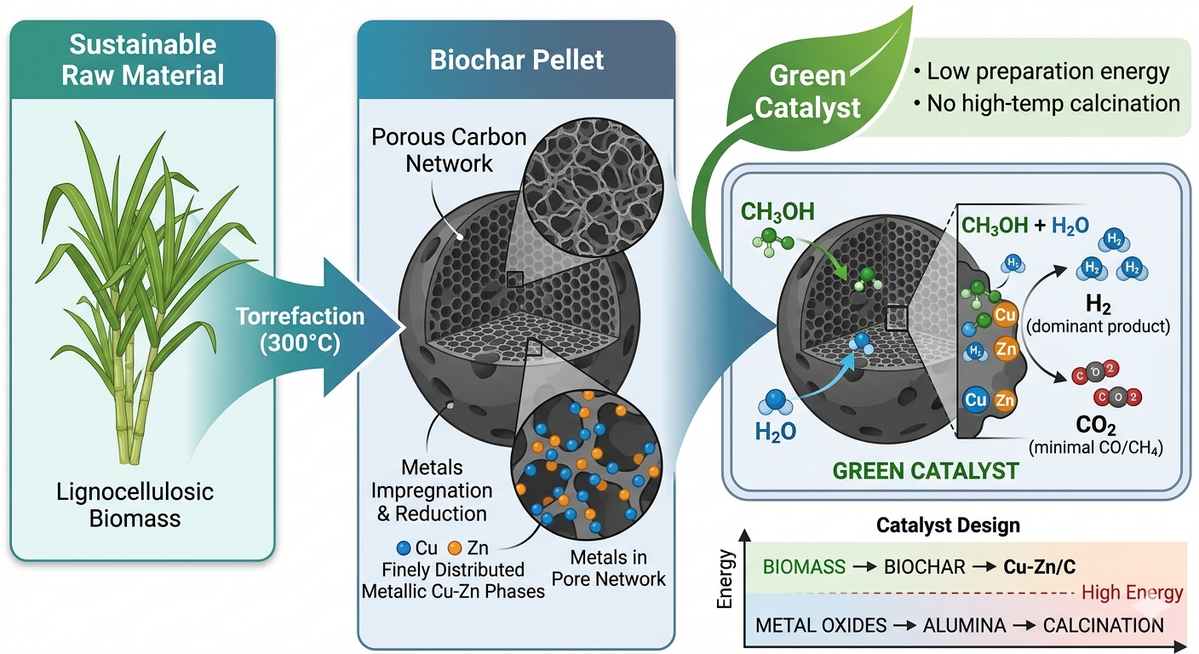
This project primarily focuses on the development of catalysts for hydrogen production via thermochemical processes using renewable energy. In hydrogen energy research, the catalytic activity of materials plays a crucial role in determining the hydrogen production rate. Our research objective is to enhance catalyst performance, reduce costs, and develop highly efficient catalysts with high conversion rates, thereby accelerating the application of hydrogen energy. The goal is to synthesize a low-temperature molybdenum-copper-zinc (MoC-Cu-Zn) catalyst. Currently, there are no published studies on MoC-Cu-Zn catalysts for methanol reforming hydrogen production. This low-temperature molybdenum-based catalyst has the potential to reduce the energy consumption required for steam reforming hydrogen production, achieving energy efficiency. Copper provides high catalytic activity, while zinc offers stability at low temperatures and helps minimize carbon monoxide and methane formation. Furthermore, the heat source required for hydrogen production can be derived from industrial waste heat, particularly waste heat below 250°C, which accounts for more than 50% of the total industrial waste heat. In most industries, this heat is directly released into the atmosphere, making it a valuable resource for recovery and reuse, contributing to the transformation from waste heat utilization to a hydrogen economy. This study estimates that biomethanol steam reforming could achieve a conversion rate exceeding 90%, with a hydrogen yield of over 2.5 mol H₂ per mol CH₃OH (the theoretical maximum being 3 mol H₂ per mol CH₃OH). In parallel, the research will extend to biomass energy pathways. Biomass feedstocks will be processed through torrefaction to generate syngas or solid fuels, which will be further evaluated for energy conversion applications. Recruit three international students to conduct a 3–5 month research project in Taiwan. Each student will collaborate with their home university professor and local researchers to publish at least one research paper in an international journal, enhancing Taiwan’s global academic visibility. During their stay, students will be encouraged to consider pursuing a Ph.D. at a Taiwanese university after graduation, fostering international academic collaboration and strengthening research exchanges between Taiwan and global institutions.
- Field: Engineering
- School: National University of Kaohsiung
- Organizer: Department of Chemical and Materials Engineering
- Period of Apply: 2026/05/01 - 2026/12/31
- Term: 2026/07/01
- Fee: There is no registration fee required to attend or participate at the National University of Kaohsiung. However, accommodation expenses are to be covered by the participants. The cost may vary depending on the selected room type. The estimated accommodation fee is approximately 5,000 NTD.
TEEP participants will receive a monthly stipend of at least NTD 15,000, which may be increased up to NTD 30,000, provided that the total support remains within the average monthly funding limit of the project. The exact stipend level depends on the availability of the principal investigator’s research funding.
In addition, airfare support for participants from Europe and the United States may be provided, primarily funded through the National Science and Technology Council (NSTC) under the TEEP program budget allocated to each university.
This stipend is tax-exempt in accordance with applicable regulations. - Website of Program: chihyikai.wixsite.com/seml
- Contact Person:Yi-Kai Chih
- Email:chihyk@nuk.edu.tw
- Phone:886+968999579