



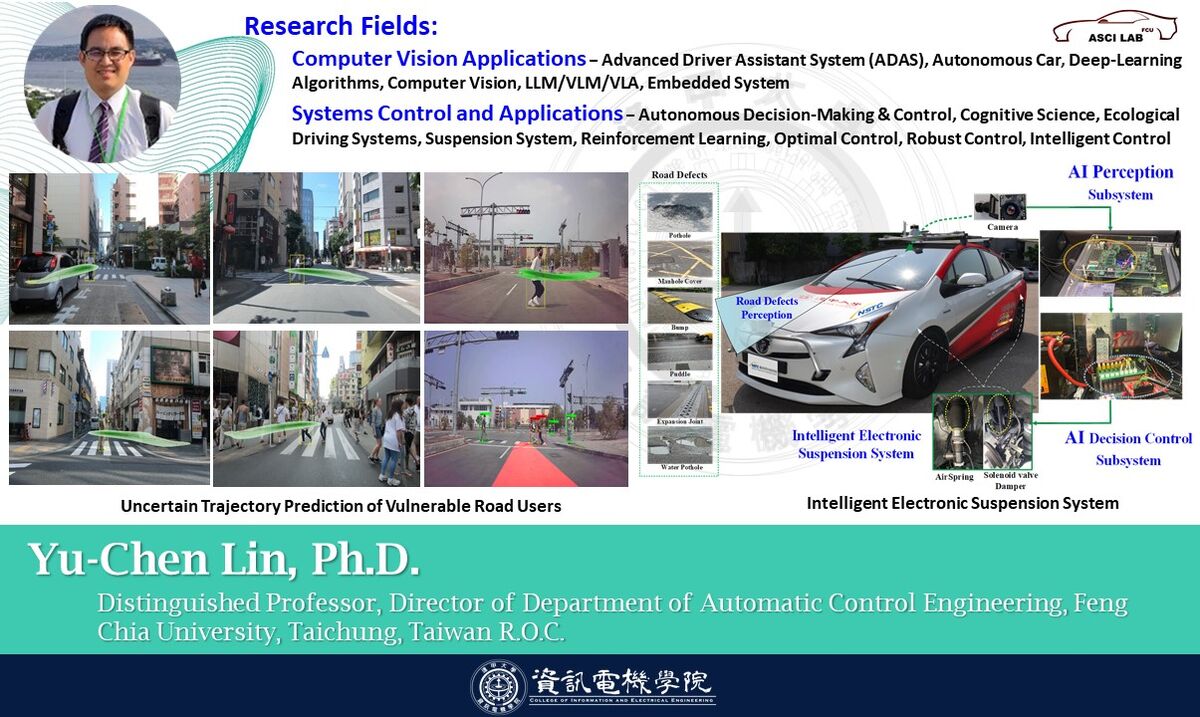
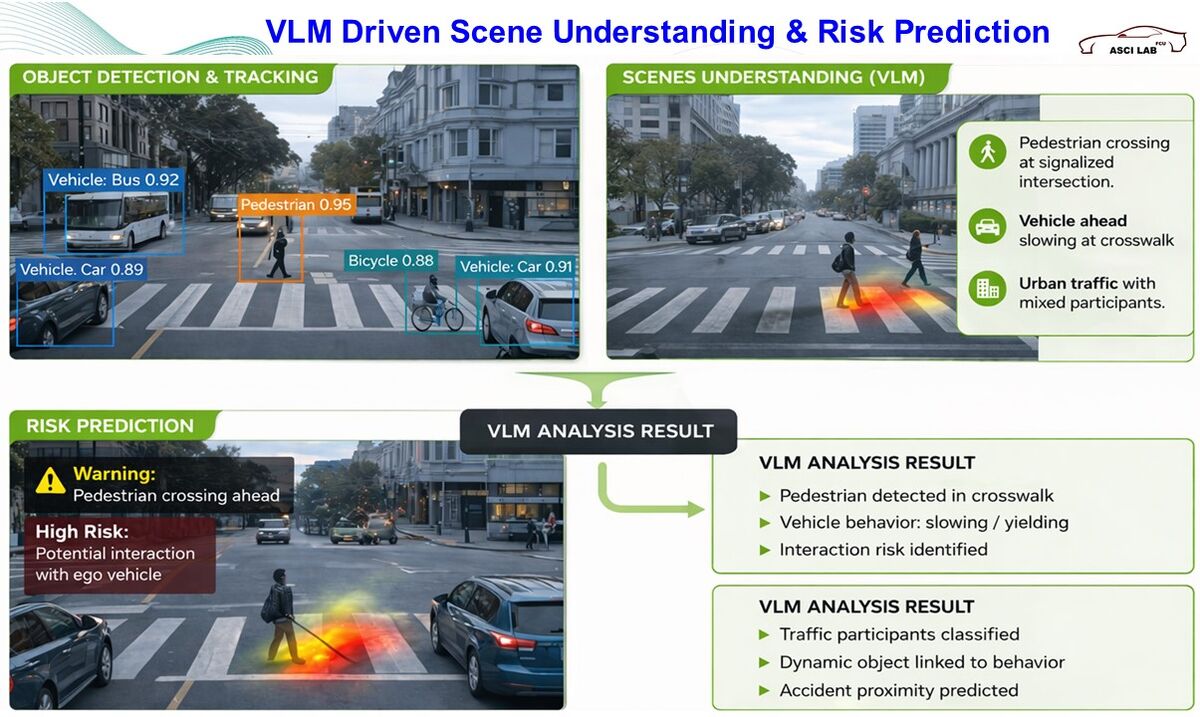
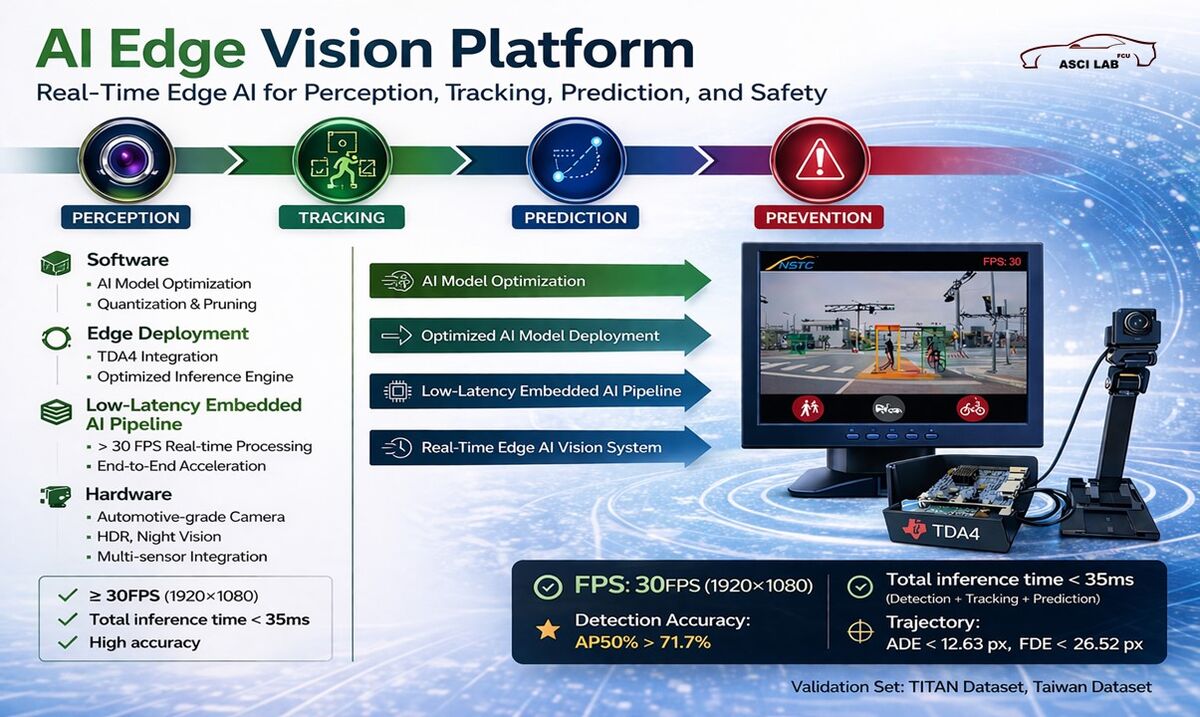
1. Software Development (Core Requirement) This project involves pure software-oriented development, focusing on advanced AI and computer vision techniques. Participants are expected to have programming experience in: ----------------------------------------------------------------------------------- Languages: C, C++, Python Libraries/Frameworks: OpenCV, PyTorch / TensorFlow (preferred) Environment: Linux OS (Ubuntu) ------------------------------------------------------------------------------------ The goal is to develop efficient, real-time AI algorithms for perception, prediction, and safety-critical applications. 2. VLM-Driven ADAS System Development This project focuses on developing a Vision-Language Model (VLM)-driven Advanced Driver Assistance System (ADAS) for intelligent risk understanding and prediction. The key research components include: - Object Detection & Tracking: Real-time detection of vehicles, pedestrians, and cyclists using deep learning models - Scene Understanding via VLM: Integrating Vision-Language Models to interpret complex traffic scenarios (e.g., pedestrian crossing, vehicle yielding behavior) - Risk Prediction & Interaction Analysis: Predicting potential collisions by combining trajectory estimation and semantic understanding - Semantic-to-Action Intelligence: Bridging perception and decision-making to enable early warning and proactive safety mechanisms This research emphasizes moving beyond traditional perception toward context-aware and explainable AI systems for autonomous driving. 3. Embedded System & Edge AI Platform The project also includes deployment of AI models on embedded edge platforms, focusing on real-time performance and system optimization. The key topics include: - AI Model Optimization: Model quantization, pruning, and acceleration for edge deployment - Edge AI Deployment: Implementation of AI algorithms on embedded systems for real-world applications - Low-Latency AI Pipeline: End-to-end perception → prediction → prevention pipeline with < 35 ms inference time - Multi-Sensor Integration: Integration of automotive-grade cameras and sensor systems for robust perception This part focuses on bridging AI algorithms with real-world deployment, ensuring both efficiency and reliability in practical environments.
![]()
- Field: Engineering
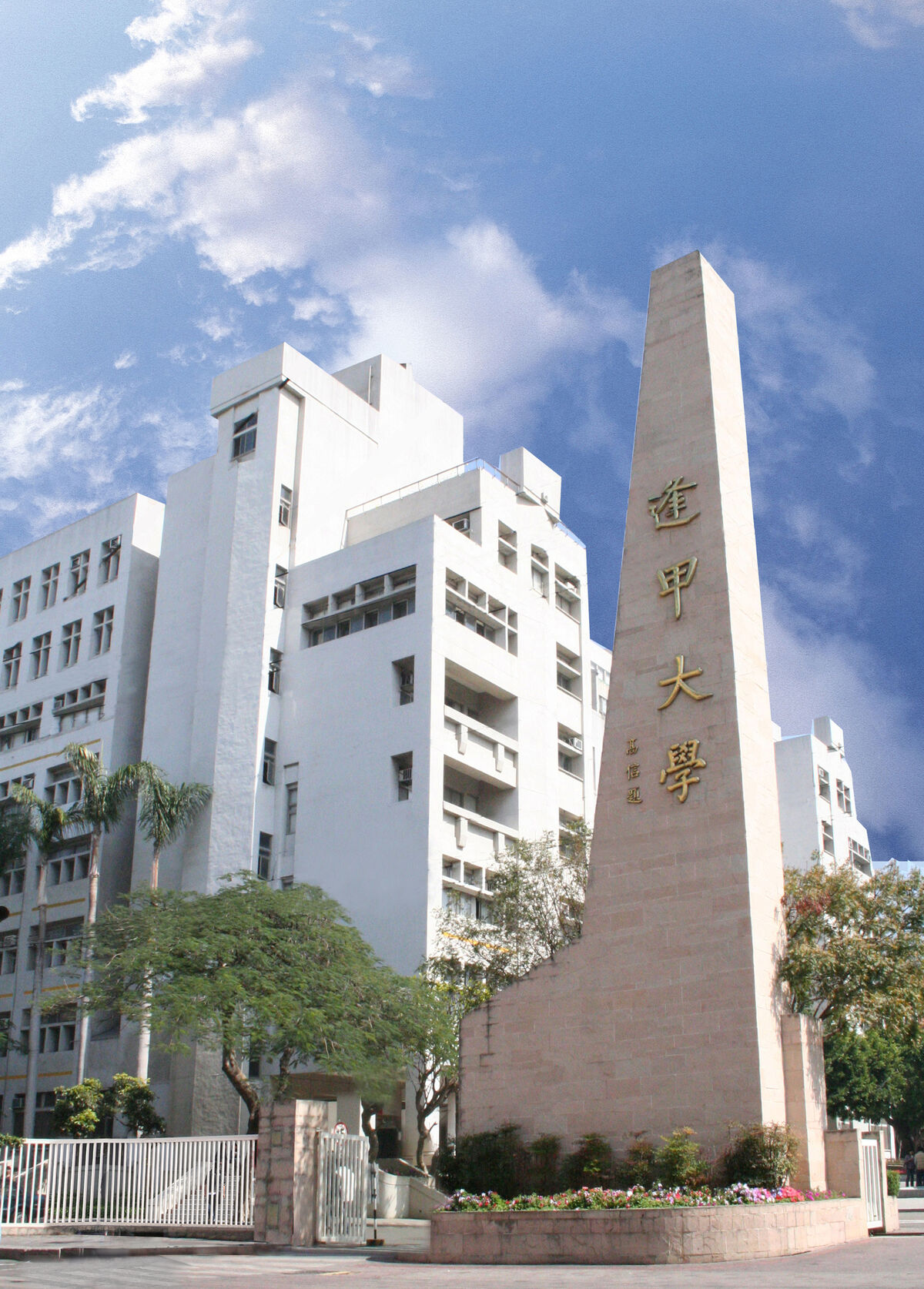
- School: Feng Chia University
- Organizer: Department of Automatic Control Engineering
- Period of Apply: 2026/01/01-2026/12/31
- Term: 2026/01/01-2026/12/31
- Fee: This program is primarily supported through the Taiwan Experience Education Program (TEEP). If the application is approved, participants will receive a monthly scholarship of approximately TWD 15,000~20,000 for a duration of six months. This scholarship is intended to partially support living expenses during the stay in Taiwan.
1. The house rent fee needs to paid by yourself.
2. We will pay you NT$15000~20000/Month.
The position is considered unpaid (no salary); however, the scholarship serves as a financial subsidy rather than formal employment compensation. Regarding accommodation and daily life arrangements, the university will provide assistance through designated staff members and student buddies to help participants settle in and adapt to the local environment.
Participants may be responsible for certain expenses, including but not limited to:
Application or registration fees (if applicable)
Accommodation fees (on-campus or off-campus housing)
Personal living expenses exceeding the provided scholarship
Airfare, visa fees, and insurance costs
Detailed information about accommodation options and related costs will be provided upon acceptance into the program. - Website of Program: fcuace428.wixsite.com/-acsi-laboratory/projects-6



- Contact Person:Chui-Hong Chiu
- Email:michaelchiu2000@gmail.com
- Phone:+886-4-24517250 ext 3913