









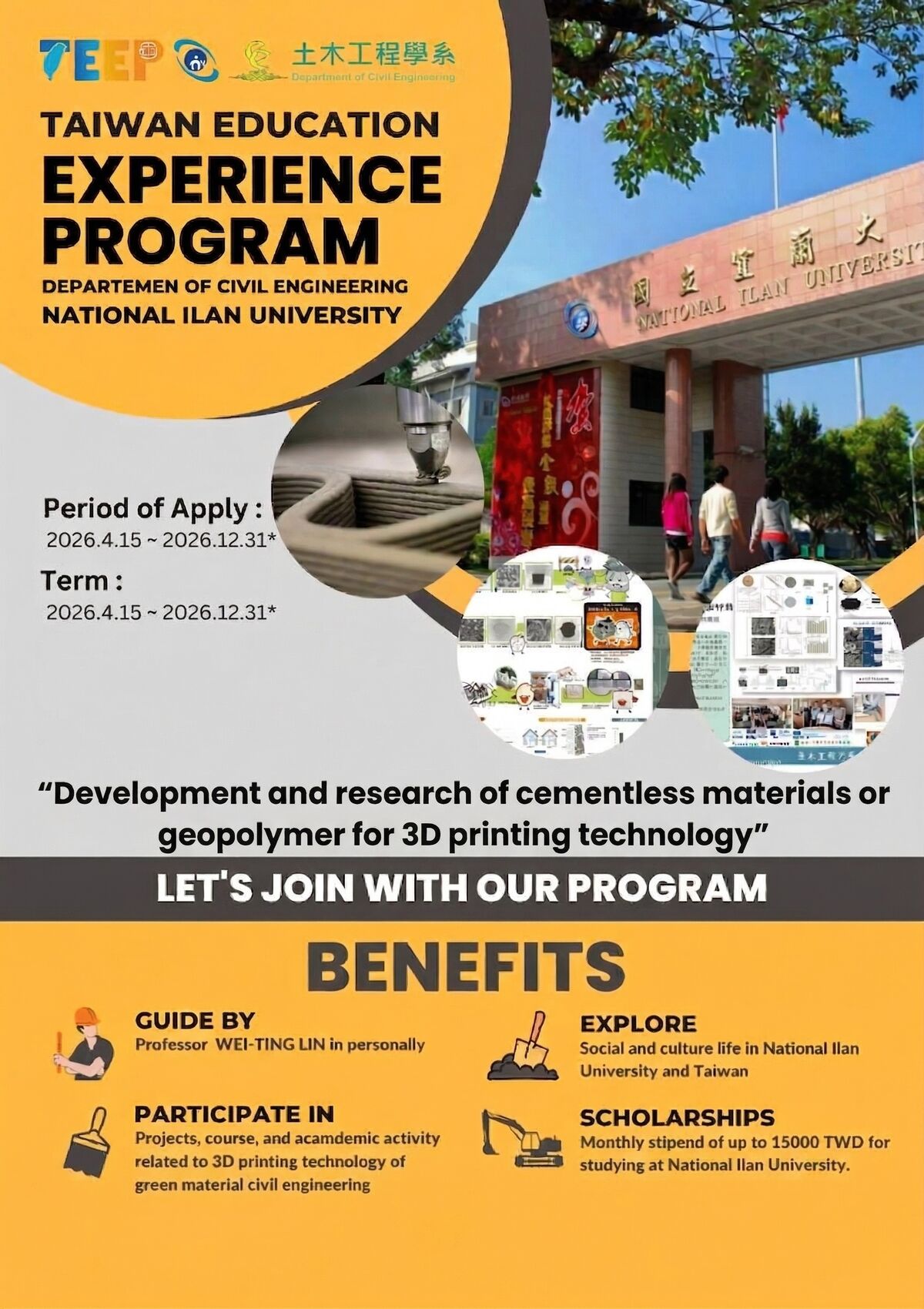
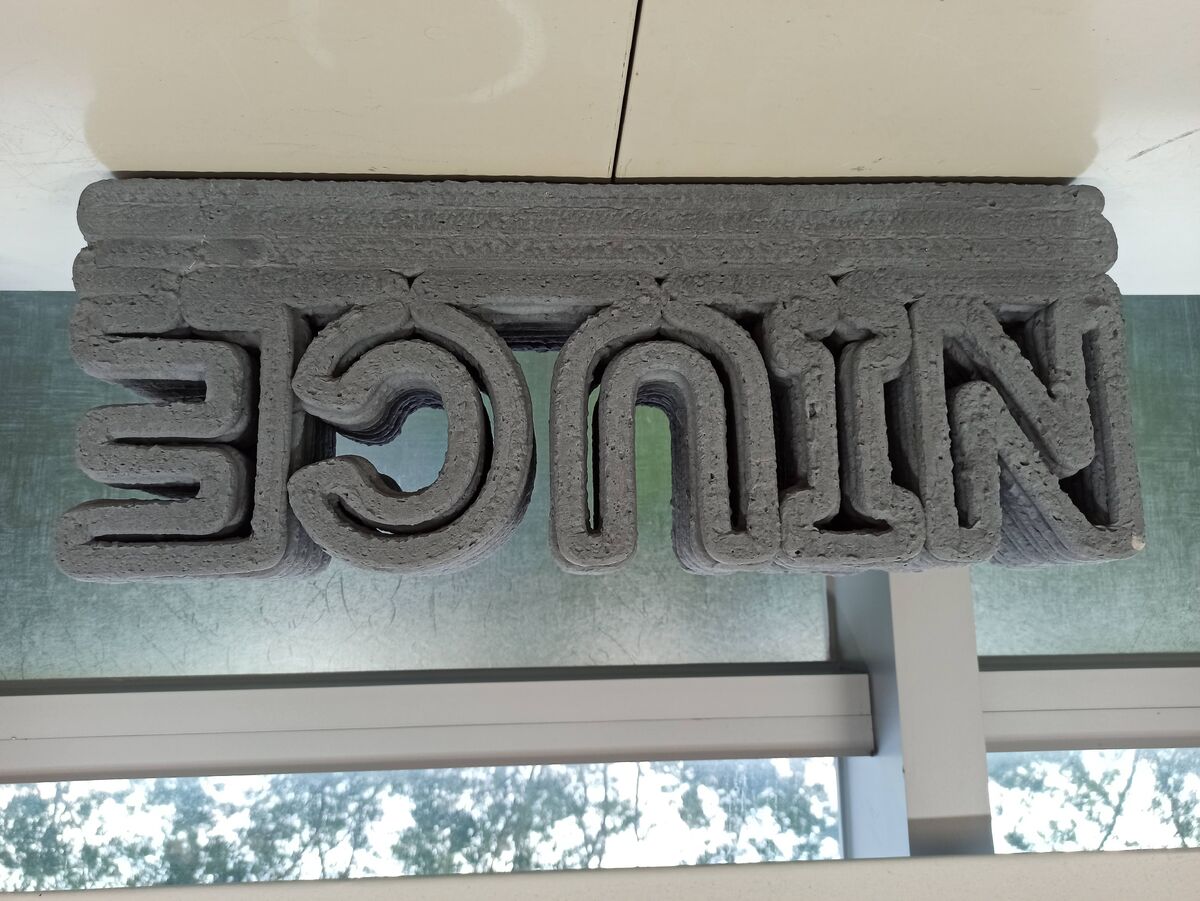
Program Overview This research program focuses on the intersection of advanced manufacturing and sustainable construction by developing eco-friendly, cementless materials—specifically geopolymers—tailored for 3D Concrete Printing (3DCP) technology. As the construction industry seeks to reduce its massive carbon footprint, moving away from traditional Ordinary Portland Cement (OPC) is a critical step. Under the direction of Prof. Wei-Ting Lin, this project aims to formulate, test, and optimize geopolymer mixtures that can meet the rigorous rheological and structural demands of 3D printing. Core Objectives Material Formulation & Circular Economy: The project utilizes industrial by-products (such as fly ash, ground granulated blast-furnace slag, and silica fume) activated by alkaline solutions to create geopolymer binders. It not only eliminates the need for carbon-intensive cement but also recycles industrial waste. Rheological Optimization: A major challenge in 3DCP is balancing extrudability (the ability to flow smoothly through a printer nozzle) with buildability (the ability of the printed layers to support subsequent layers without collapsing or deforming). The research focuses on fine-tuning the setting time, viscosity, and yield stress of the geopolymer mixtures. Mechanical & Durability Assessment: The program rigorously tests the printed cementless structures for compressive and flexural strength, interlayer bonding (a common weak point in 3D printing), and long-term durability under environmental conditions. Microstructural Analysis: Investigating the hydration and polymerization processes at the microscopic level to better understand how these cementless materials cure and bond in a layered printing process. Significance and Impact By successfully marrying geopolymer technology with automated 3D printing, Prof. Wei-Ting Lin's research represents a significant leap toward sustainable, rapid, and automated construction. The outcomes of this program are expected to: Drastically reduce CO2 emissions associated with construction materials. Enable complex, customized architectural designs that are difficult or impossible to achieve with traditional formwork. Reduce construction time, labor costs, and material waste. Note 1: This is a generalized scientific overview based on the project title and the established research expertise of Prof. Wei-Ting Lin in the fields of sustainable civil engineering materials and automated construction technologies. Note 2 : A minimum duration of 6 months.
![]()
- Field: Engineering
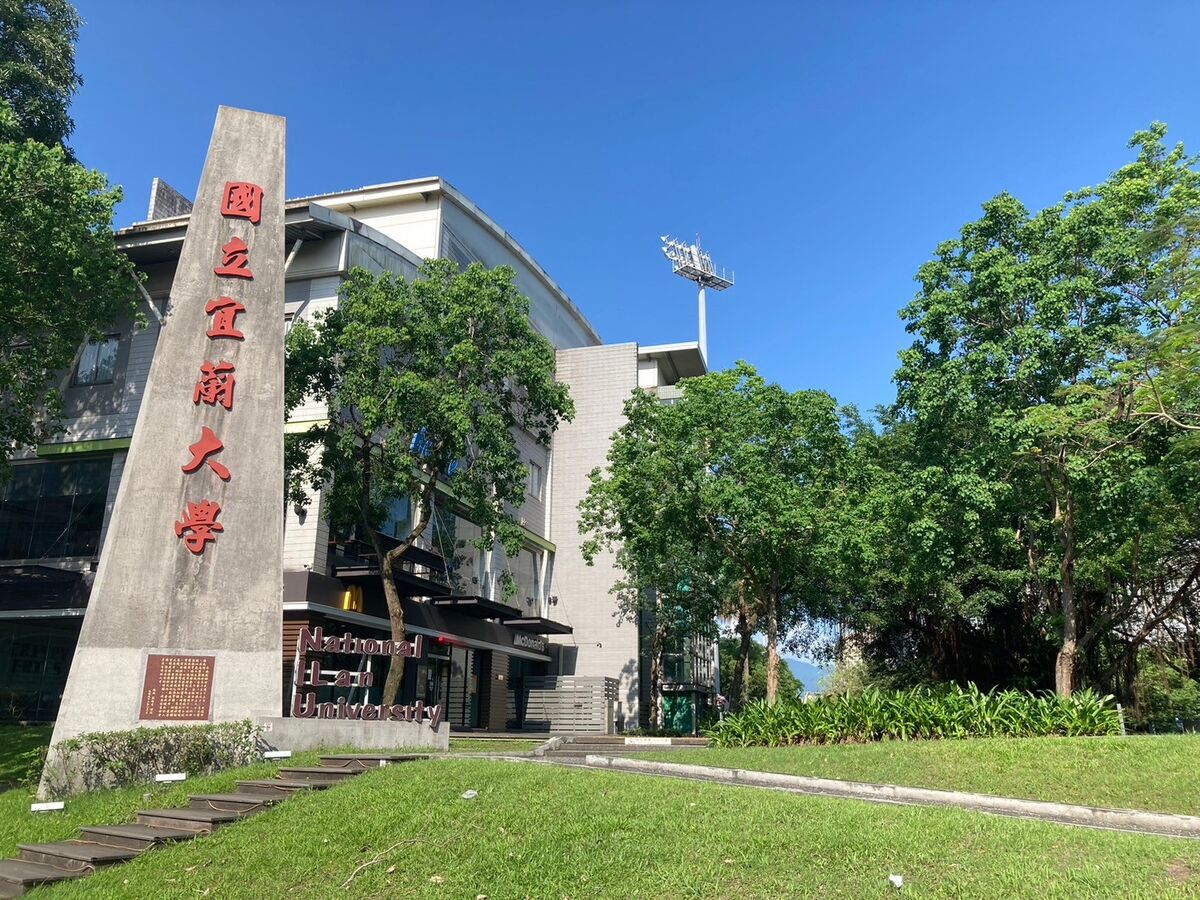
- School: National Ilan University
- Organizer: Depaetment of Civil Engineering
- Period of Apply: 2026/04/15-2026/12/31
- Term: Now till 2026/12/31
- Fee: Funding: Successful applicants will typically receive a monthly living allowance of approximately NT$15,000
Administration fee: NIU charges NT$10,000
Accommodation fees: NT$160 per day or NT$9,500 per semester

- Contact Person:Wei-Ting Lin
- Email:wtlin@niu.edu.tw
- Phone:+886-39317567