









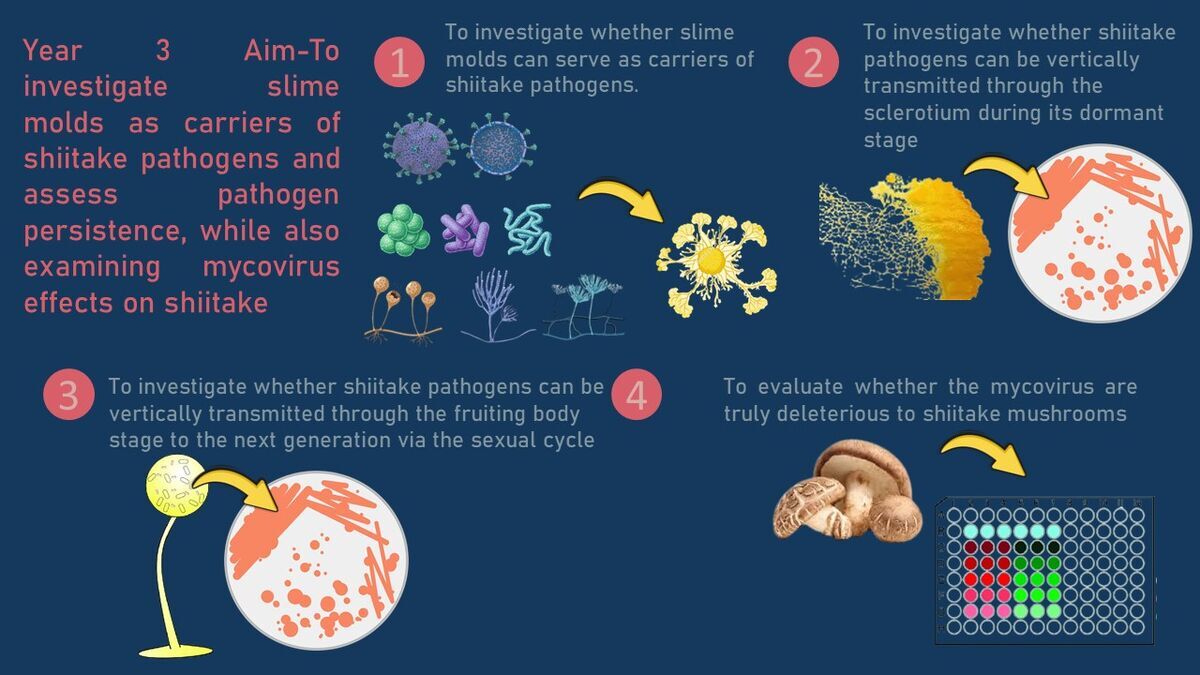
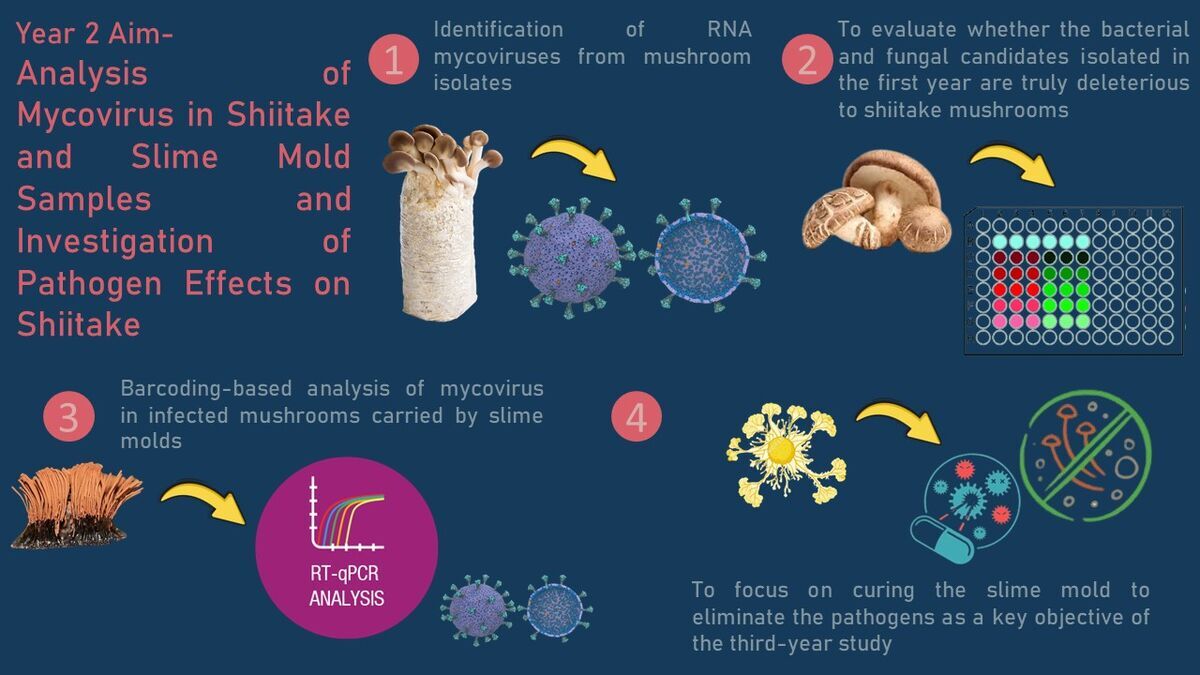
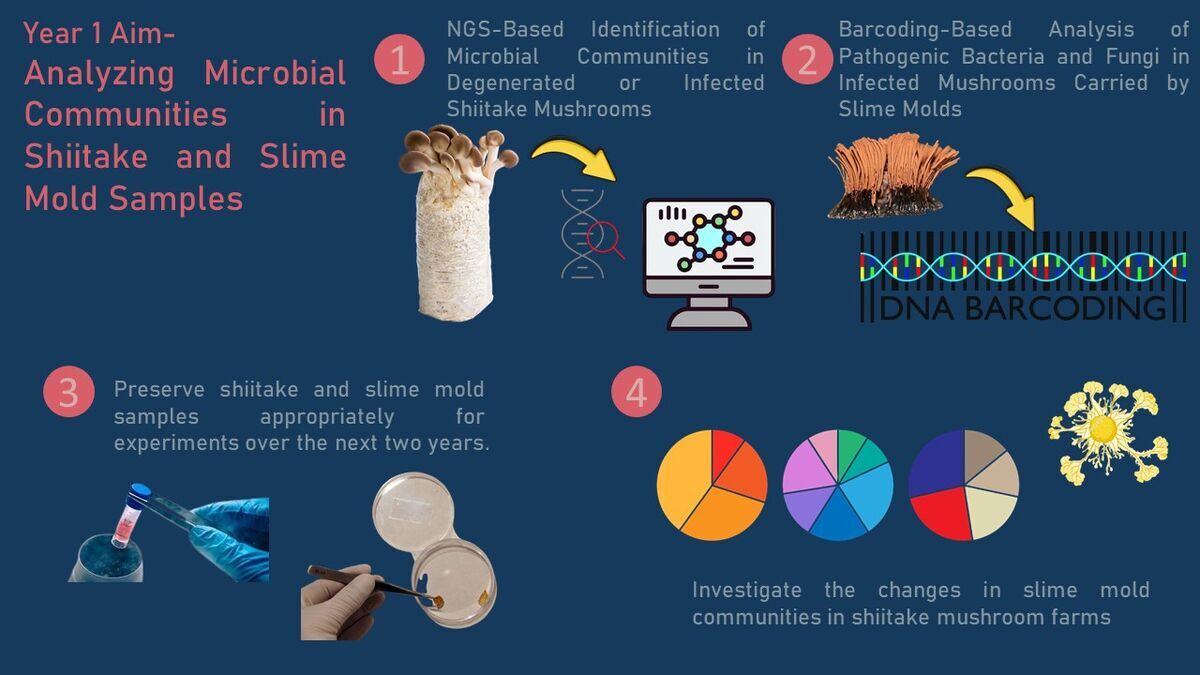
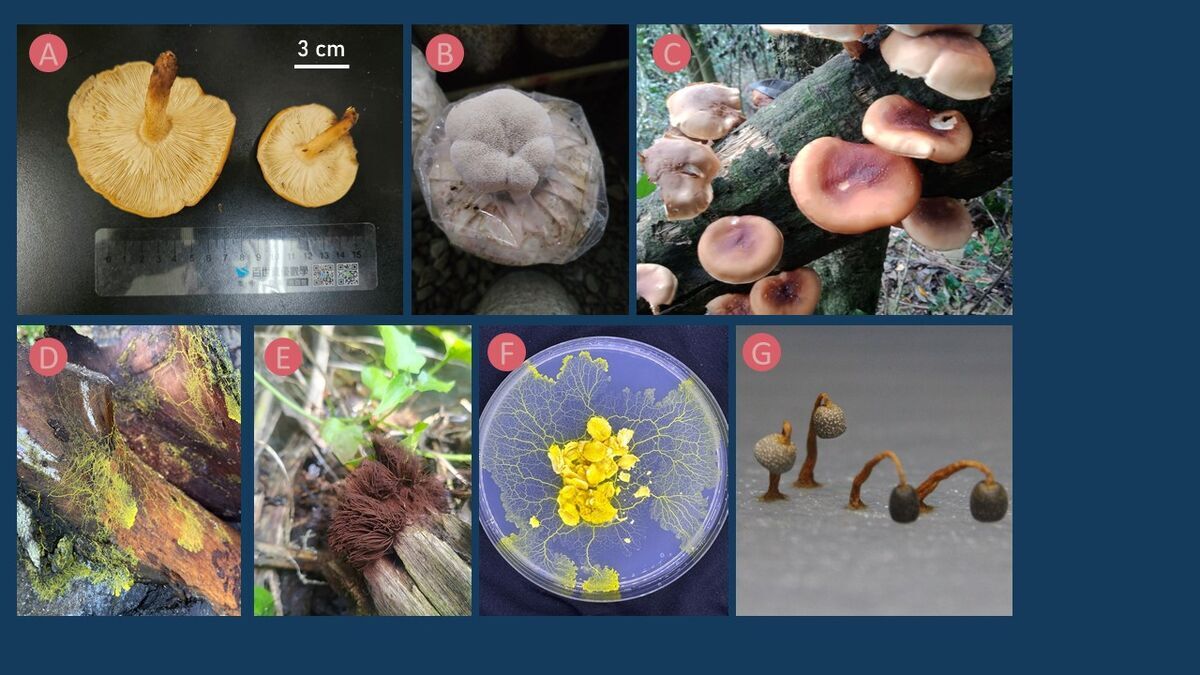
Objective 1 of This Research Project This project aims to elucidate the mechanisms underlying the defensive mutualism between the slime mold Physarum polycephalum and its core endosymbiont, Leifsonia naganoensis. Integrating molecular biology, physiology, and evolutionary ecology, this study investigates how this symbiosis enhances host fitness across three dimensions. First, we investigate the intracellular survival and vertical transmission of the symbiont throughout the host’s life cycle. We hypothesize that L. naganoensis evades lysosomal digestion by modulating phagosomal pH and vesicle trafficking, while employing evolved antioxidant systems (e.g., GlbO hemoglobin) to counteract host immunity. Furthermore, we examine bacterial survival strategies during host dormancy—mediated by trehalose accumulation and heat shock proteins—and characterize the spatial mechanisms of vertical transmission via fungal spores. Second, we validate the ecological benefits of light-induced pigmentation. Utilizing LC-MS/MS, we will characterize the chemical structure of light-induced carotenoids. Concurrently, non-targeted metabolomics will be employed to determine whether the symbiont triggers systemic metabolic remodeling, thereby reducing intracellular reactive oxygen species (ROS) accumulation. We posit that this physiological buffering optimizes the host’s foraging behavior under light stress, altering risk–reward assessments in accordance with optimal foraging theory. Finally, we explore co-evolutionary adaptations and reproductive trade-offs. The study compares the transcriptional sensitivity of the symbiont to red light with that of free-living relatives to assess co-evolutionary synchronization. Additionally, we quantify resource allocation shifts in symbiont-free hosts, testing the hypothesis of a strategic transition from quantity-based to quality-based (K-strategy) reproduction under stress. Collectively, this research constructs a comprehensive model of symbiotic evolution and environmental adaptation. Objective 2 of This Research Project The second objective focuses on “Shiitake Strain Optimization and Circular-Economy Applications of Mushroom Waste for Silver Nanoparticle Synthesis,” conducted through an industry–academia collaboration with Yuan-Yi-Duo Biotechnology Co., Ltd. This project integrates green technology and innovative agricultural concepts to promote the sustainable upgrading of Taiwan’s mushroom industry through biotechnology. Shiitake mushroom (Lentinula edodes) is an important edible fungus in Taiwan; however, the industry faces challenges arising from climate change, particularly elevated temperatures and strain mixing, which lead to unstable yield and quality. This study will first establish a DNA barcode system for shiitake strains using gene sequencing technologies, providing farmers with a scientific basis for germplasm management and traceability. This approach aims to prevent strain contamination and hybrid degeneration, thereby ensuring genetic stability and maintaining industrial competitiveness. Simultaneously, heat-tolerant shiitake strains will be selected and developed to enhance growth adaptability under climate change conditions, strengthening agricultural resilience and sustainability. In addition, this project incorporates circular-economy principles by reutilizing by-products generated during mushroom production, including shiitake stems, spent mushroom substrates, and cultivation bags rich in active mycelia. These mushroom wastes possess strong biological reduction capacity and can serve as green reducing agents for the synthesis of silver nanoparticles (AgNPs). The synthesized AgNPs exhibit excellent antimicrobial properties and may be applied in environmentally friendly cleaning products and pet-related materials (e.g., antibacterial cat litter). This innovative strategy not only reduces agricultural waste pollution but also converts waste into high value-added products, establishing a bio-circular utilization model that transforms agricultural resources into functional materials. Overall, this project integrates genetic biotechnology, materials science, and sustainable agricultural concepts. It aims not only to strengthen strain management and climate resilience within Taiwan’s shiitake industry but also to establish a new paradigm for agricultural waste reutilization, demonstrating the practical value of green technology-driven agriculture and the circular economy. The internship provides a monthly scholarship of up to 15,000 NT, excluding airfare and accommodation, with the exact amount determined by interview results. A minimum commitment of three to four months is required. Applicants should ideally have microbiology-related experience and English communication skills. All candidates must complete an online interview.
![]()
- Field: Natural Science
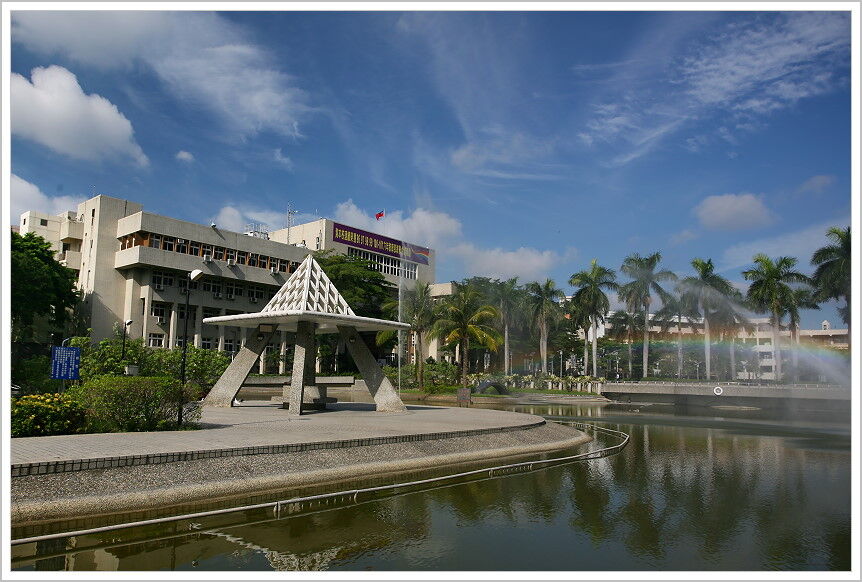
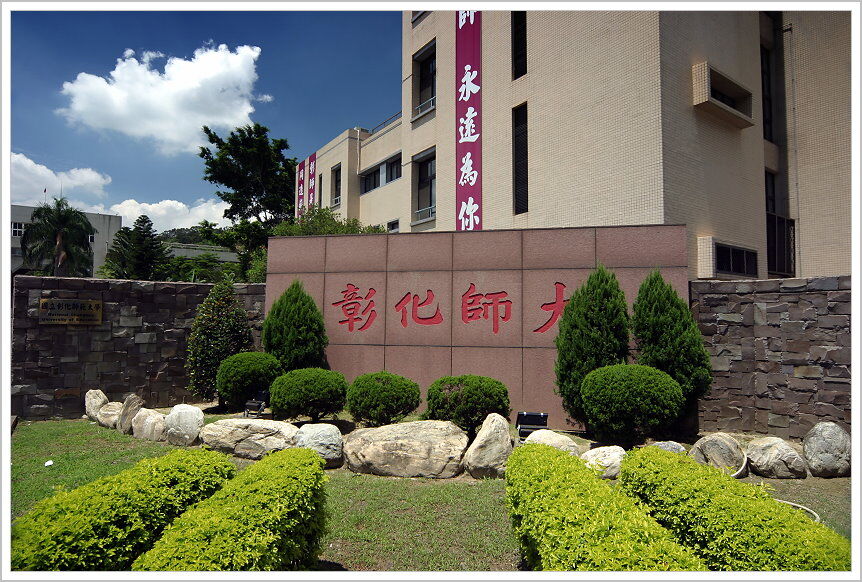
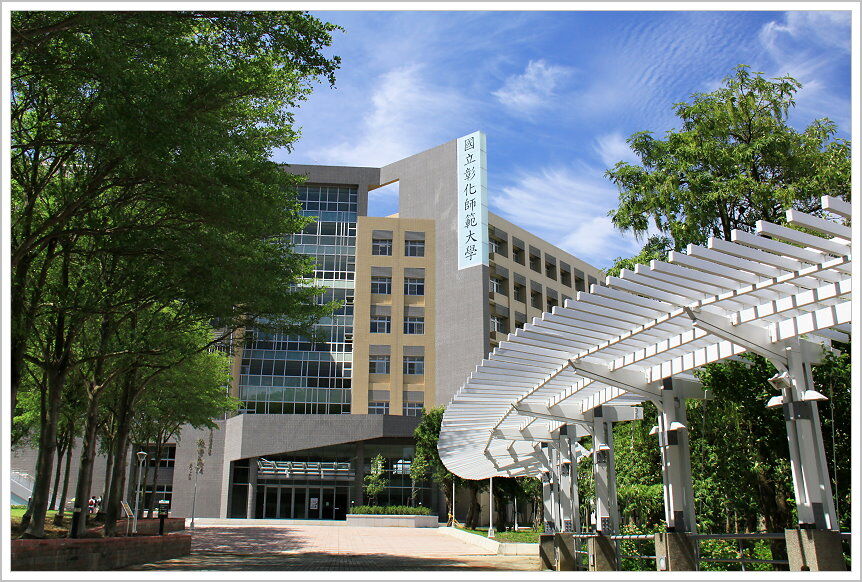
- School: National Changhua University of Education
- Organizer: Biology
- Period of Apply: 2026/04/01 - 2026/12/31 (untill full)
- Term: 2026/05/01 - 2026/12/31 (untill full)
- Fee: No registration fee. Accommodation fees are based on university rates, which have historically been very affordable. Details can be discussed during the interview.
- Website of Program: shorturl.at/hMY37


- Contact Person:Lina
- Email:phuongnguyen6703@gmail.com